
Facelift (cervico-facial)
Facelift (Cervico-Facial Lift) at the Cannes Mougins Aesthetic Centre
Facelift (Cervico-Facial Lift) at the Cannes Mougins Aesthetic Centre
A facelift, also known as a cervico-facial lift, is a cosmetic surgery procedure that aims to rejuvenate the appearance of the face and neck.
Over time, the skin loses its elasticity, the muscles slacken, and the effects of gravity, sun exposure and stress become visible.
A facelift can correct these signs of ageing by tightening the skin and underlying muscles, giving the face a more youthful and refreshed appearance.
What is a neck and face lift?
A cervico-facial lift is a surgical procedure that treats the lower two-thirds of the face and neck. It involves repositioning the deep tissues of the face, removing excess skin and tightening weakened muscles. This procedure corrects sagging skin, jowls, marionette lines, and neck sagging, while preserving the natural expression of the face.
Why consider a facelift?
There are several reasons why a person might consider a facelift:
To correct the signs of ageing: Reduce deep wrinkles, sagging skin and drooping features.
Improve facial harmony: Restore sharp facial contours and a more toned appearance.
Boost self-confidence: Feeling better about yourself can have a positive impact on your personal and professional life.
Combat the effects of stress and lifestyle: Stress, smoking and sun exposure accelerate skin ageing.
Who is a good candidate for a cervico-facial lift?
Ideal candidates for a facelift are men and women in good general health, typically between the ages of 40 and 70, who show signs of ageing in the face and neck. It is essential that the skin retains a certain amount of elasticity to allow for optimal healing. Non-smokers and individuals with realistic expectations about the results are good candidates. A consultation with a qualified surgeon will determine whether the procedure is right for you.
The different types of facelifts
Complete Cervico-Facial Lift
A full facelift is the most comprehensive procedure for rejuvenating the face and neck. It treats sagging skin and muscles, deep wrinkles, jowls and neck sagging. This procedure restores facial structures to their original position, offering harmonious and natural results.
Mini-Lift
A mini facelift is a less invasive version of a traditional facelift. It is intended for patients with moderate skin sagging, usually in the cheeks and jawline. The incisions are shorter, and recovery is faster. This technique is ideal for people who want a subtle improvement without resorting to a full facelift.
Temporal Lift
A temporal lift focuses on the upper part of the face, particularly the temples, eyebrows and outer corners of the eyes. It is effective for raising drooping eyebrows, reducing wrinkles and opening up the eyes. This procedure can be performed on its own or in combination with other procedures for overall rejuvenation.
Neck lift
A neck lift aims to correct sagging skin and muscles in the neck, as well as excess fat under the chin. It redefines the neckline and eliminates the “turkey neck” appearance. This procedure can be performed at the same time as a facelift for optimal results.
The preoperative process
Initial consultation and medical assessment
During the initial consultation, the surgeon will assess your medical history, general health and expectations. They will examine the quality of your skin, elasticity, bone structure and degree of tissue laxity. Photographs may be taken to help plan the procedure. The surgeon will explain the different options available, the techniques used and the expected results.
Preparation for surgery
Before the procedure, you will be given specific instructions:
Stop smoking: It is recommended that you stop smoking several weeks before and after surgery to promote proper healing.
Medication: Certain medications, such as anticoagulants or anti-inflammatories, will need to be suspended to reduce the risk of bleeding.
Hygiene: You may be given instructions on skin care and antiseptic shampoos. Personal
organisation: Plan for a period of rest for the first 5 to 7 days after surgery.
Preoperative instructions to follow
It is essential to follow the surgeon’s instructions carefully:
Fasting: Do not eat or drink anything after midnight on the night before the operation.
Clothing: Wear comfortable, easy-to-put-on clothes on the day of the operation.
Transport: Arrange transport to and from the hospital, as you will not be able to drive after the operation.
The course of the intervention
The surgical techniques used
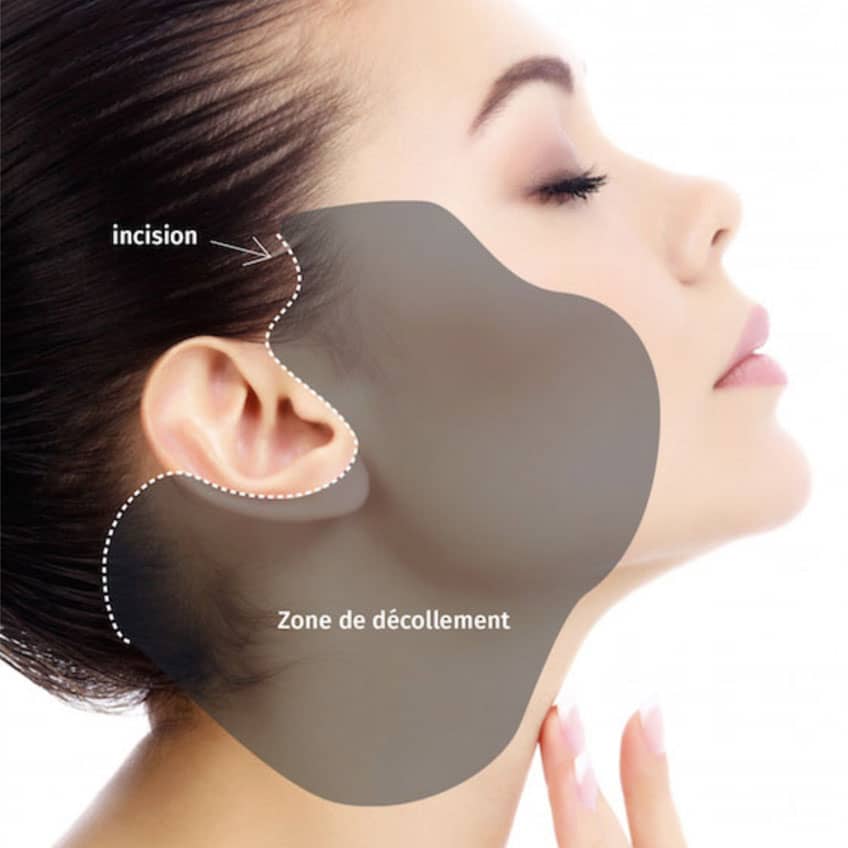
A facelift is usually performed under general anaesthesia or local anaesthesia with sedation. The surgeon makes discreet incisions, often hidden in the hair and around the ears. The underlying tissues are repositioned, the muscles are tightened, and excess skin is removed. If necessary, liposuction may be performed to remove fat deposits. The surgeon takes care to preserve the natural expression of the face by respecting the anatomical structures.
Anaesthesia and pain management
Anaesthesia is administered by a qualified anaesthetist who remains present throughout the procedure. After surgery, painkillers will be prescribed to manage any discomfort. Most patients experience discomfort rather than severe pain, and this quickly subsides in the days following the procedure.
Duration of the operation and hospitalisation
The procedure lasts between 2 and 4 hours, depending on the extent of the corrections to be made. Outpatient treatment is often possible, but in some cases, an overnight stay in the clinic may be recommended to ensure optimal post-operative monitoring.
The post-operative period
Immediate care after surgery
At the end of the procedure, a compression bandage may be applied to reduce swelling and bruising. Drains are sometimes inserted to remove accumulated fluid and are usually removed the following day. It is normal to experience a feeling of tightness, slight numbness or bruising, which will gradually fade away.
Recovery and return to daily activities
Recovery after a facelift requires rest and patience:
First week: Rest at home, avoid exertion and keep your head elevated.
Second week: Bruising and swelling subside, light activities may be resumed.
Third week: Gradually return to social and professional activities, avoiding intense physical exertion.
The surgeon will provide you with detailed instructions for home care, including cleaning the incisions and managing pain.
Medical follow-up and healing
Follow-up consultations are scheduled to monitor your recovery. Stitches are removed between the 5th and 12th day after surgery. Although permanent, the scars are discreet and fade over time. The use of healing creams and sunscreen is recommended to promote optimal healing.
Expected results and benefits of a facelift
Face and neck rejuvenation
A facelift offers significant rejuvenation by correcting the visible signs of ageing. Patients regain a firmer face, defined contours and a toned neck. The overall appearance is younger and more rested, without altering natural expression.
Impact on self-confidence and wellbeing
Improving one’s physical appearance can have a positive effect on self-confidence and self-esteem. Patients often report feeling more fulfilled, with a better self-image, which can positively influence their social and professional relationships.
Sustainability of results
The results of a facelift are long-lasting, but the natural ageing process continues. In general, the effects last between 7 and 15 years. Adopting a healthy lifestyle, protecting your skin from the sun and avoiding tobacco help to prolong the benefits of the procedure.
Cost and coverage of facelifts
The cost of a facelift depends on several factors: Surgeon and
anaesthetist fees Clinic
or hospital fees
Type of procedure and techniques used
A personalised quote will be provided during the consultation, after assessing your specific needs.
Facelifts are not covered by health insurance.
Patient FAQs about facelifts
At what age can one consider a face lift?
There is no specific age, but the procedure is generally performed between the ages of 40 and 70, depending on the signs of ageing and the elasticity of the skin.
Are the scars visible?
The incisions are strategically placed to be discreet, often hidden in the hair or natural skin folds. Over time, the scars become almost imperceptible.
How long do the results last?
The results can last for around ten years. The ageing process continues naturally, but you will always look younger than if you had not had the procedure.
Does a facelift alter facial expression?
The aim is to rejuvenate the face while maintaining a natural expression. An experienced surgeon will take care to avoid a frozen or stretched appearance.
What are the non-surgical alternatives?
Treatments such as botulinum toxin injections, fillers, peels, or lasers can reduce certain signs of ageing, but their effects are temporary and less pronounced than a facelift.
Summary of key points
A facelift is an effective solution for combating the signs of ageing, offering lasting rejuvenation of the face and neck. By choosing a skilled surgeon and following the instructions, you can achieve natural and satisfying results, thereby improving your self-confidence.
Next steps in considering a facelift
If you are interested in a facelift:
Make an appointment: A consultation will allow you to obtain personalised information.
Get informed: Ask all your questions to fully understand the procedure.
Prepare yourself: Adopt a healthy lifestyle to optimise your recovery.
Further information on the intervention
General
anaesthesia Duration of procedure: 2½ to 4 hours
In Mougins: 1 day’s hospitalisation at the Arnault Tzanck Private Hospital in Mougins
Location of scars: See photo opposite Recovery
time: 7-12 days Post-operative
pain: moderate
Main complications: Bruising, swelling, temporary numbness in the cheeks