
Breast lipofilling Cannes Mougins
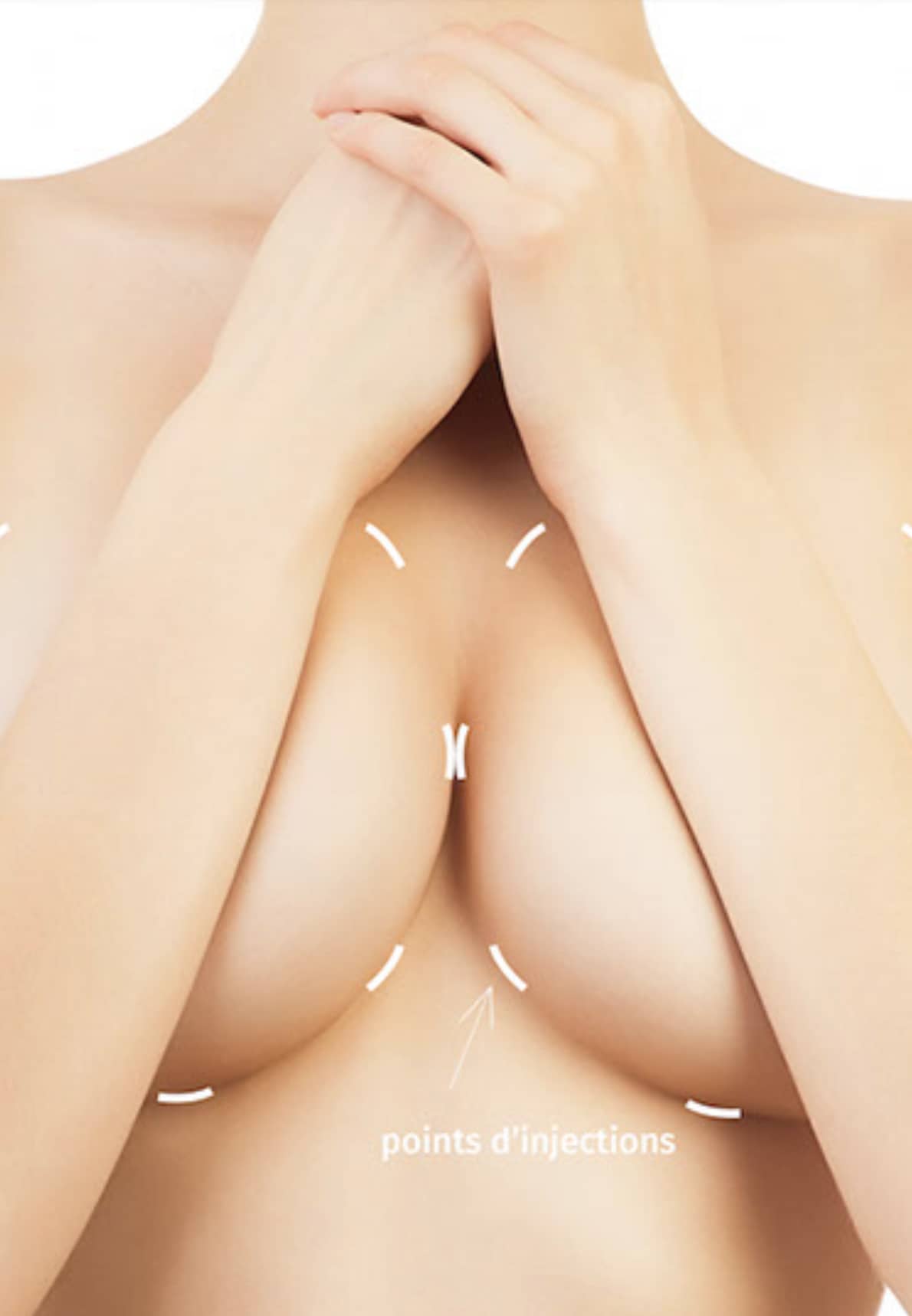
What is lipomodelling or breast lipofilling?
Lipomodelling, also known as lipofilling or fat transfer, is a cosmetic surgery procedure that involves removing fat from an area of the body where it is abundant, such as the abdomen or thighs, and reinjecting it into the breasts. This technique allows for a natural increase in breast volume without the use of artificial implants.
Advantages of breast augmentation through lipomodelling
The advantages of this technique include a more natural result, no significant scarring, generally rapid recovery, and the dual benefit of slimming down a donor area while improving the appearance of the breasts. It is also an excellent option for people who are reluctant to consider synthetic implants.
How does breast augmentation through lipomodelling work?
Before the procedure, a detailed consultation is necessary to assess the patient’s health, discuss expectations, and determine the fat donor areas. Medical tests may be required to ensure that the patient is healthy and fit to undergo the operation.
Preparation for the procedure
Fat extraction
The fat is gently suctioned out using a fine cannula through liposuction, minimising trauma to the surrounding tissue.
Fat treatment
Once extracted, the fat is centrifuged or filtered to purify the fat cells and prepare them for reinjection.
Fat reinjection
The fat cells are then injected into the breasts using small cannulas, allowing the breast to be shaped with precision.
Post-operative care and recovery
Recovery may vary but is generally quick. Temporary bruising and swelling may occur. It is advisable to wear a supportive bra and avoid strenuous exercise for several weeks.
Comparison between breast augmentation techniques
Lipomodelling / Lipofilling
The lipomodelling technique involves fat injections without major incisions, resulting in minimal scarring.
Technology and prostheses used
Silicone implants, whether smooth or microtextured, are commonly used for their texture and consistency. However, for those who prefer to avoid implants, lipomodelling offers an attractive and effective alternative.
Contraindications and considerations
Although breast augmentation by lipomodelling is generally safe, it does carry certain risks and contraindications. The main contraindications include coagulation disorders, certain autoimmune diseases, and very low body weight, which can complicate the necessary fat harvesting. Risks associated with the procedure may include infection, necrosis of the reinjected fat cells, irregularities in the shape of the breasts, and the appearance of small fatty cysts.
Another important factor to consider is that lipofilling generally only increases breast volume by half a cup size or one cup size, but no more. This technique is therefore reserved for patients who want a moderate breast augmentation. It is therefore important to discuss the final volume you want with your surgeon.
What results can we expect?
The results are natural and the breasts feel very soft to the touch. The fat that survives gives a permanent result, although some cells may be absorbed initially. A certain percentage of the reinjected fat will be naturally reabsorbed by the body. It is estimated that around 70% of the fat will remain in the breast. Touch-ups may be necessary to maintain or improve the initial result.
Frequently asked questions from our patients regarding breast augmentation through lipomodelling
The procedure generally lasts between 1 and 3 hours, depending on the amount of fat to be transferred and the complexity of the donor and recipient areas.
Post-operative pain is usually mild to moderate and can be effectively controlled with painkillers. Most patients report more discomfort in the areas where the fat was harvested than in the breasts themselves.
Like any surgery, lipomodelling carries risks of infection, bleeding and reaction to anaesthesia. Specific complications may include fat necrosis, irregularities in breast shape, and partial resorption of the injected fat. Careful post-operative follow-up is also essential to monitor recovery and intervene quickly in the event of complications, thus ensuring patient safety and satisfaction.
Most patients can resume their normal activities after a week, although strenuous activities should be avoided for 4 to 6 weeks. The donor areas may remain sensitive for a few weeks.
Lipofilling offers a modest and natural augmentation. It is important to discuss your expectations in terms of size and shape openly with your surgeon in order to achieve a result that suits your figure.
Further information on the intervention
General
anaesthesia Duration of procedure: 1½ to 2½ hours
In Mougins: Outpatient admission or 1 night
Location of scars: See photo opposite Recovery
time: 7 days
Wear a medical bra for 4 to 6 weeks.
Avoid strenuous activity involving the arms for 6 weeks.