
Blepharoplasty
What is blepharoplasty?
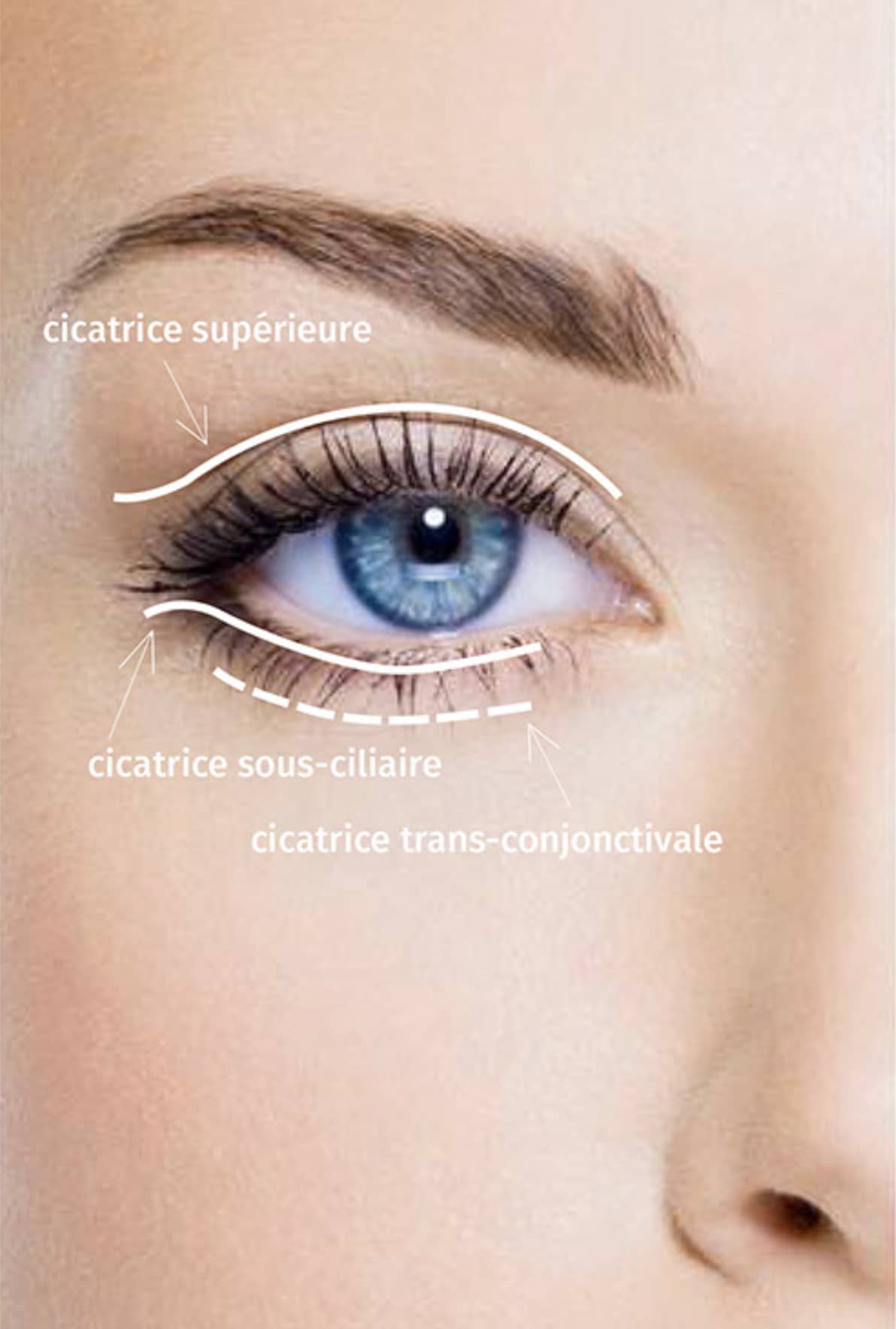
Blepharoplasty, commonly known as eyelid surgery, is a cosmetic procedure designed to improve the appearance of the upper and/or lower eyelids. It can be performed for aesthetic reasons or to improve the functionality of the eyes, particularly by removing excess skin that may obstruct vision.
Why choose blepharoplasty?
As we age, the skin on our eyelids becomes stretched and wrinkled, which can obstruct our vision. Blepharoplasty at the CECAM aesthetic centre can visibly improve these conditions by removing excess skin and, if necessary, fat pockets. Reasons for choosing blepharoplasty may include the desire to rejuvenate the appearance around the eyes, correct vision problems caused by drooping eyelids, or treat bags under the eyes that make you look tired.
Differences between upper and lower blepharoplasty
Upper blepharoplasty involves correcting drooping eyelids, which can reduce the field of vision and give a tired appearance, while lower blepharoplasty is often used to remove excess skin and bags under the eyes. Both types can be performed simultaneously for a complete rejuvenation of the eyes.
The benefits of blepharoplasty
Improvement of obstructed vision
In cases where excess skin hangs over the eye and obstructs vision, upper blepharoplasty may be necessary. After consultation with an ophthalmologist, partial coverage by social security is sometimes possible.
Rejuvenation of the appearance around the eyes
Blepharoplasty not only corrects the “tired” appearance of the face, but can also be combined with other procedures such as a cervico-facial lift or fat injections for overall rejuvenation.
By removing excess skin from the upper eyelids, blepharoplasty can significantly improve the field of vision for patients who suffer from severe drooping.
Preparation for surgery
Initial consultation with the surgeon
During the initial consultation at the Cannes Mougins aesthetic centre, Dr Ihrai discusses the patient’s expectations, examines the eyelids and recommends the best surgical approach.
Specific pre-operative instructions
It is often advisable to avoid certain medications that could increase the risk of bleeding, such as aspirin or anti-inflammatory drugs like ibuprofen, during the week prior to surgery. It is also recommended to stop smoking several weeks before and after the operation to promote better healing.
The blepharoplasty procedure
The surgeon makes the incision, removes the excess skin and, if necessary, the fat pockets. The surgery is often performed on an outpatient basis, allowing the patient to return home the same day.
Post-operative recovery and care
After the procedure, bruising may appear and persist for up to 10 days. The surgeons at the cosmetic surgery centre will prescribe anti-oedema and homeopathic treatment to minimise discomfort. Bandages are applied and it is recommended that you use ice and rinse your eyes with saline solution. You will be given specific instructions to follow during the first week after the operation. The stitches are removed after one week.
Risks associated with pre-existing physical condition
Medical conditions such as thyroid disorders, diabetes, or serious eye diseases such as glaucoma or diabetic retinopathy can increase the risk of complications. A preoperative medical evaluation is essential.
Required medical examinations
Preoperative examinations, such as blood tests and an ophthalmological assessment, may be required to ensure that the patient is in optimal condition for surgery.
Frequently asked questions from our patients regarding eyelid surgery
Cosmetic blepharoplasty is performed mainly to improve the appearance of the eyelids and rejuvenate the eyes. Functional blepharoplasty, on the other hand, is performed for medical reasons, for example when excess skin obstructs vision.
Post-operative pain is generally minimal. Most patients report a feeling of tightness rather than actual pain, which can be controlled with medication prescribed by your surgeon.
Most patients can resume normal activities approximately 4 to 7 days after surgery, although bruising and swelling may last for 7 to 10 days. It is recommended that you follow the post-operative care instructions carefully to optimise healing.
The results of blepharoplasty are generally long-lasting. However, it is important to note that the natural ageing process continues and may gradually affect the appearance of the eyelids over time.
As with any surgery, there are risks such as infection, reaction to anaesthesia and complications related to healing. Specific complications such as eyelid asymmetry or small cysts on the scar are possible but rare.
Glasses can be worn immediately after surgery. However, it is often advisable to limit the use of contact lenses during the first two weeks of the recovery period to avoid eye irritation.
Further information on the intervention
General anaesthesia or local anaesthesia (upper eyelids only)
Duration of procedure: 1.5 hours (lower OR upper eyelids) / 2.5 hours (lower AND upper eyelids)
In Mougins: Outpatient
hospitalisation Location of scars: See photo opposite Recovery
time: 7 days Post-operative
pain: mild